The Work–Feedback Loop
Agile work is not a framework. It is the capability to connect Work and Feedback fast and safely.
Everything that does not measurably shorten this loop is overhead.
What it is
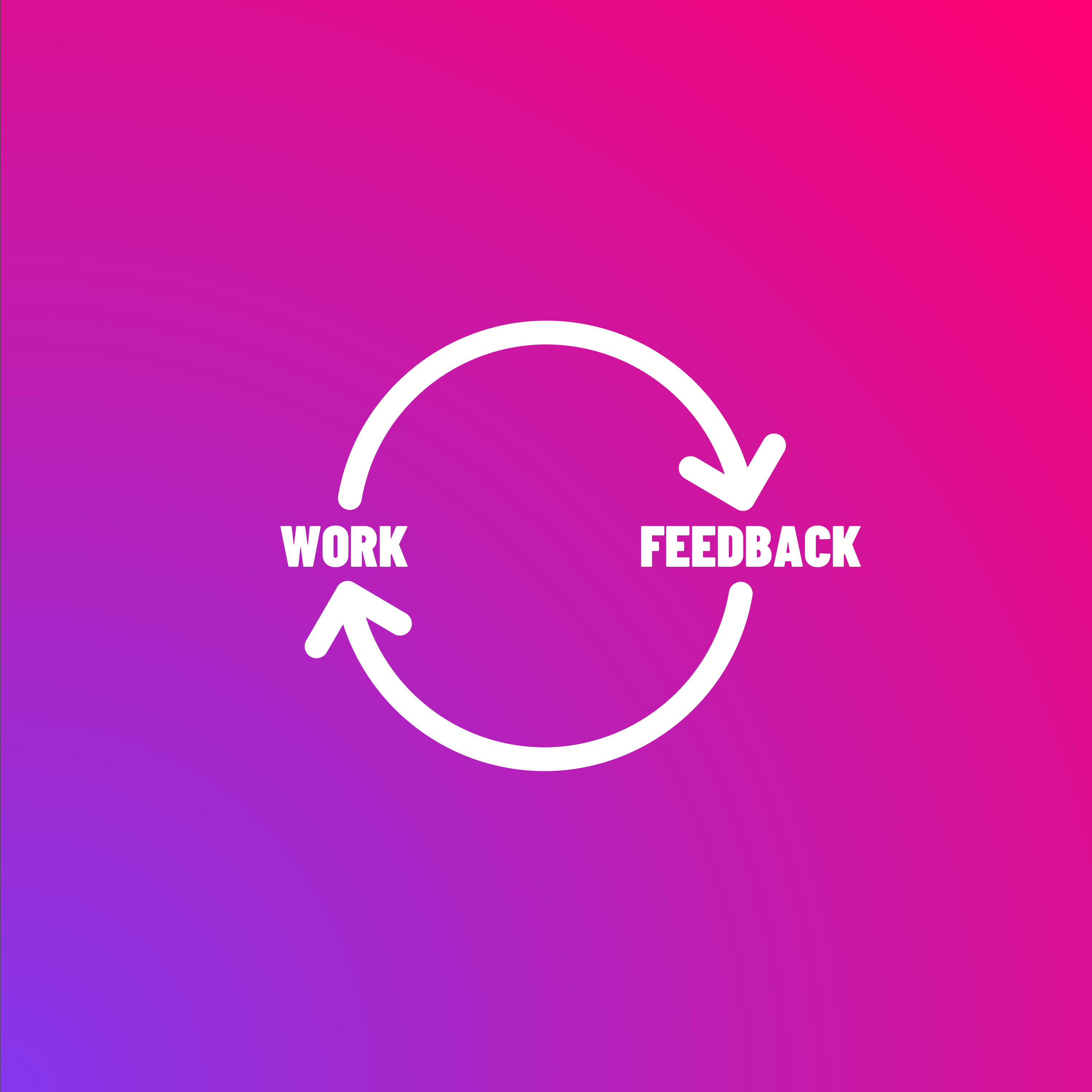
The Work–Feedback Loop is a simple model for talking about agile work without theater. You do Work, you get Feedback from reality, and you adjust. The quality of your “agility” is the speed and safety of that loop.
“Fast” without safety produces chaos. “Safe” without speed produces stagnation. The goal is fast learning without breaking the system.
What it is not
- Not a framework. Not Scrum. Not SAFe. Not “a transformation.”
- Not a new set of roles, rituals, or templates.
- Not a mindset slogan. Not motivation theatre.
- Not a promise that “if you do these steps, you will succeed.”
The model is deliberately small: it’s a lens for diagnosis and prioritization.
Work vs. Feedback: cause vs. effect
Feedback problems are effects. Work problems are causes.
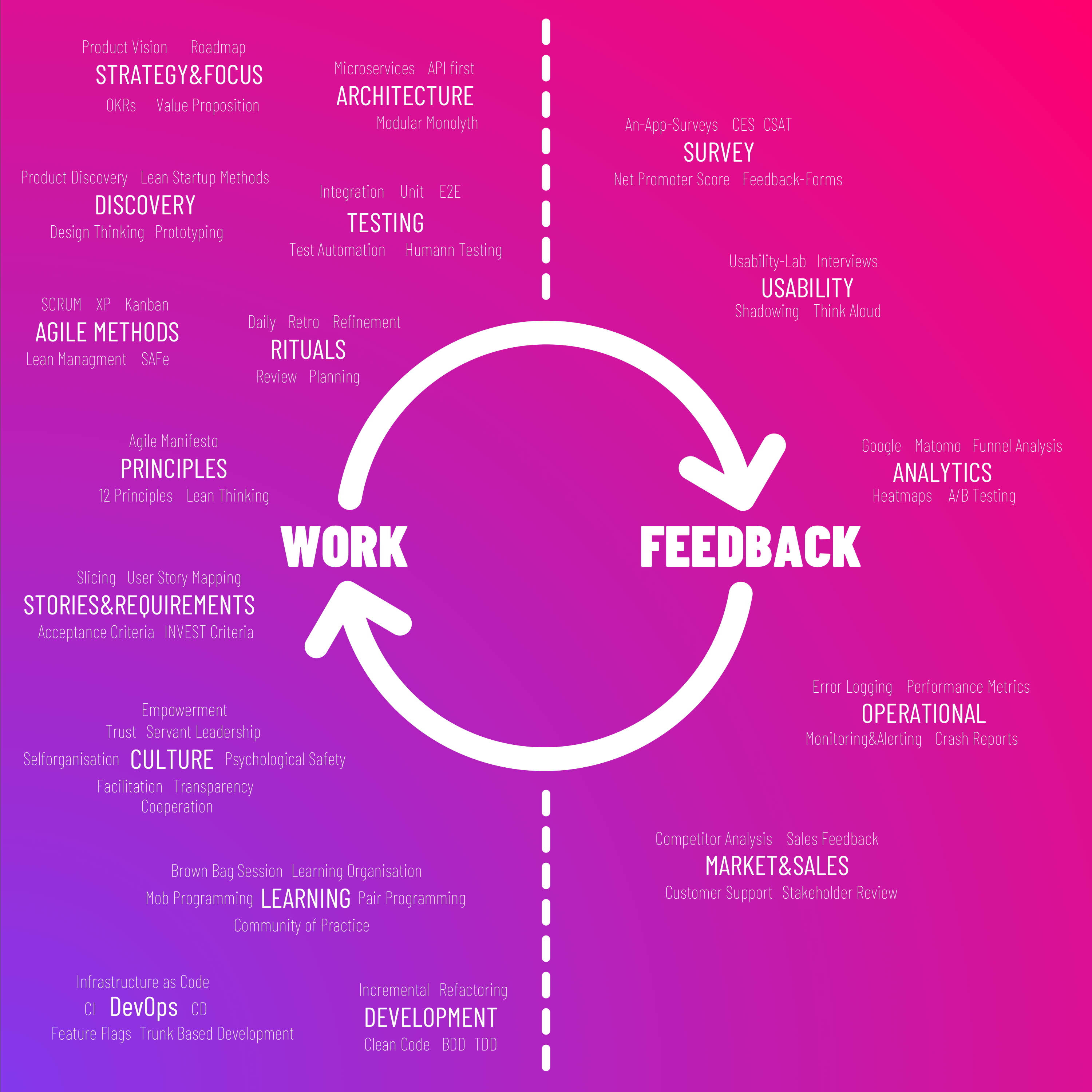
If your feedback is late, your real constraints are usually on the “Work” side: architecture that resists change, batch sizes that are too large, manual testing, weak slicing, unclear intent, or a release process that treats shipping as an event.
You can “ask for more feedback” all day. If your work cannot flow safely, feedback will stay slow.
The Work-Feedback Loop FAQ
“Isn’t this just Lean / PDCA / Build-Measure-Learn?”
You can call it Lean if you want. The name doesn’t matter. What matters is whether your organization can shorten the distance between an idea and reality. Most places debate labels while avoiding the capability work that actually changes the loop.
“Isn’t this too simplistic?”
It’s simple on purpose. Complexity is not your friend here. A model must be small enough to be used under pressure. The loop is the invariant; the details live in the concrete bottlenecks that slow it down.
“Where are people, culture, and leadership?”
They are in the loop. Culture and leadership either speed up learning—or they add friction and fear. Psychological safety, decision latency, and incentives show up as cycle time and rework. If it doesn’t change the loop, it’s theatre.
“Does this ignore power, politics, and resistance?”
No. It refuses to romanticize them. Organizations protect the status quo because it is safer than learning. The loop makes that visible: long cycles, big batches, delayed truth, and expensive surprises. If you want leverage, find what the system is doing to keep feedback late—and change that constraint.
“Isn’t feedback alone not enough?”
Correct. Feedback without the ability to act becomes frustration. The loop is Work and Feedback: you need technical and organizational capability to turn feedback into the next small, safe change.
“What is the metric?”
Measure the lead time from idea to real feedback. Not “ticket created.” Not “dev done.” Real feedback: users, operations, revenue, or behavior in production. If an initiative doesn’t shorten that, it’s overhead.
“So what should we do on Monday?”
Don’t “adopt” anything. Diagnose. Pick the single biggest constraint that delays feedback, choose the smallest intervention, and measure the change.
How to use the model (without turning it into a framework)
- Ask: How long does it take from “idea” to real feedback?
- Locate the delay: Where does work wait? Where does truth arrive late?
- Choose one constraint: One bottleneck, not ten initiatives.
- Pick a small intervention: Reduce batch size, automate a test step, slice thinner, add instrumentation, ship smaller.
- Measure: If the loop does not get shorter, stop doing it.
This is not a maturity model. It’s a ruthless prioritization tool.
If this model is not for you
- If you want a new framework to roll out across the company.
- If you want to “do agile” by adding meetings and roles.
- If you want vocabulary instead of measurable change.
If you want to build, ship, learn, and improve—welcome to the workshop.
Short version you can quote
Agile work is the capability to move through the Work–Feedback Loop fast and safely.
Everything that does not measurably shorten that loop is overhead.