The Agile Iceberg: What Actually Drives the Work-Feedback Loop

When organizations talk about agile success, they usually list things they can see on a calendar: Daily Stand-ups, Retrospectives, and Sprint Plannings. They hire Scrum Masters, buy Jira licenses, and call it a "transformation."
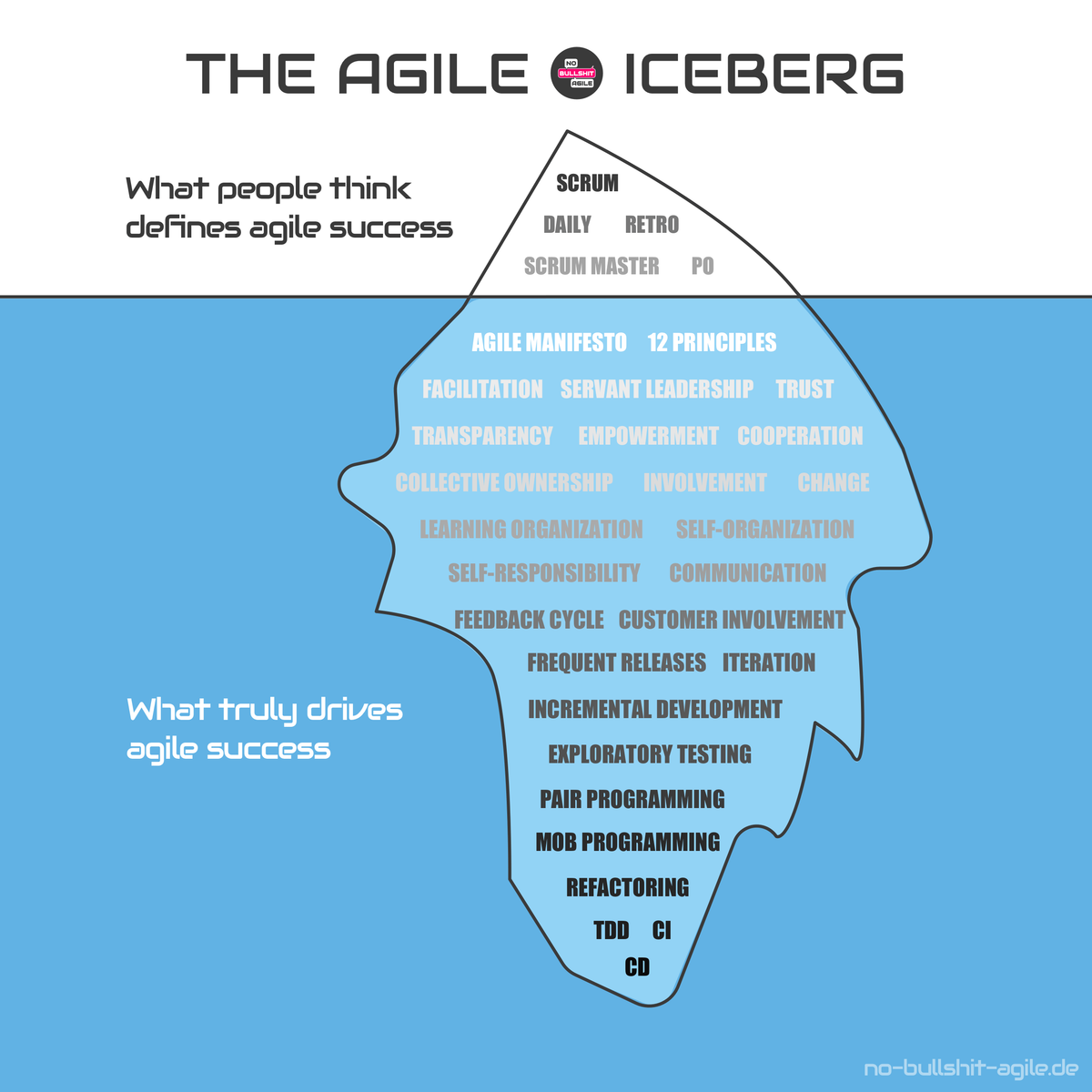
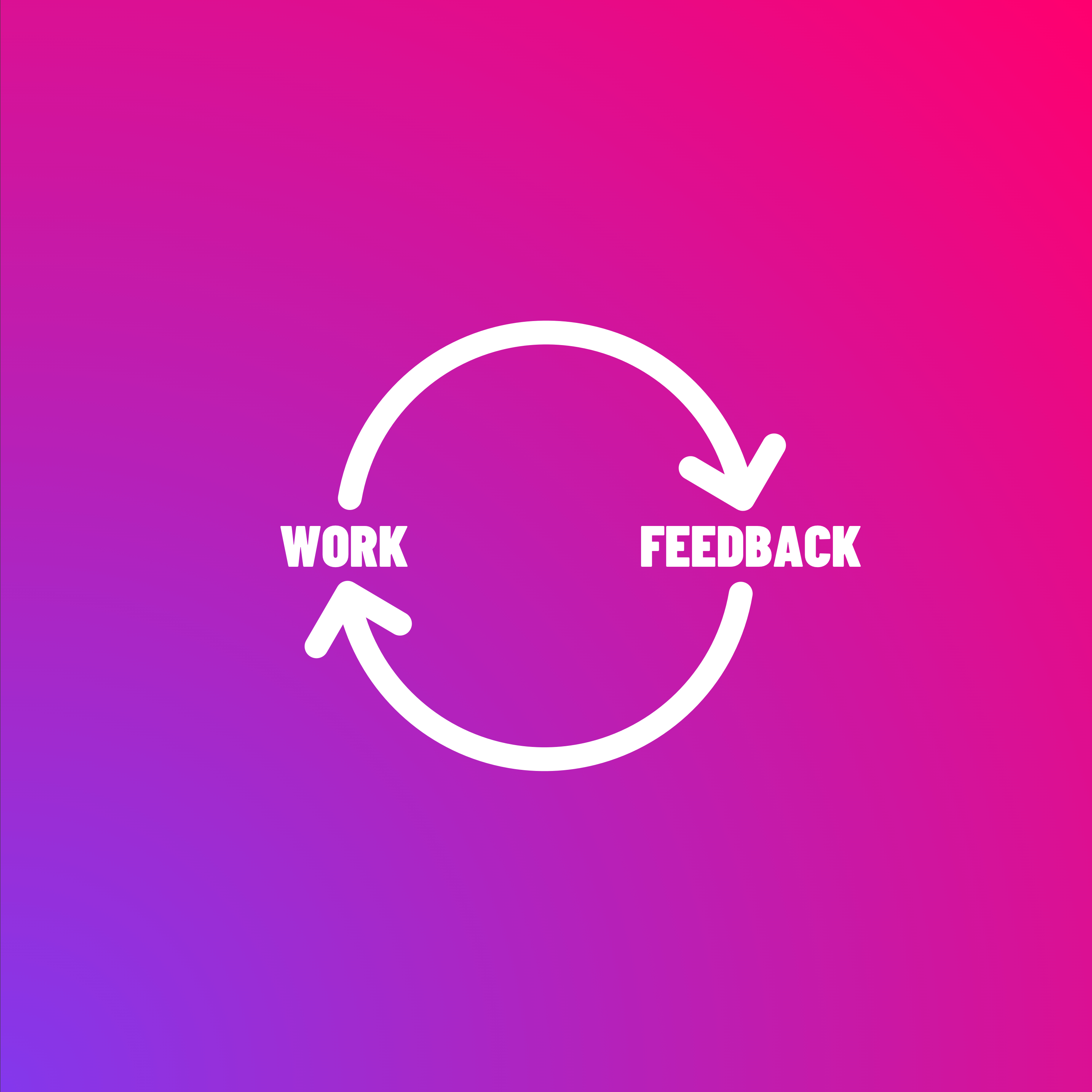
But these are just the tip of the iceberg—the visible rituals of agility. Like a real iceberg, the parts that actually determine whether you move or sink sit below the waterline. If the loop between Work and Feedback isn't getting faster or safer, you aren't "being agile"; you're just participating in expensive theater. Let's look deeper into that.
The Tip: The Surface of "Mechanical Agility"
At the top sit the practices that are easy to buy and easy to measure, but they are enablers, not drivers:
- Frameworks (Scrum, SAFe, Kanban): Rules that organize activity but don't guarantee a single ounce of value.
- Rituals (Dailies, Plannings): Synchronization points that, without the right skills, devolve into mere status reporting.
- Defined Roles: New titles that often hide old command-and-control power structures.
This level represents Mechanical Agility. It feels busy, but it’s an illusion of progress. If you stop here, you've essentially hired a world-class pit crew for a car with a broken engine. You are optimizing for activity (the theater) instead of learning (the craft). Try to look below the waterline!
The Waterline: The Great Lie Detector
The waterline is where the theater meets reality. It acts as a filter: Everything above the line is a promise; everything below is the actual capability to keep that promise. If your teams do "Sprints" (above) but have a brittle architecture and a manual testing process that takes weeks (below), the waterline becomes a wall. You see the motion, but the work never reaches the truth of the market.
Below the Surface: The Operational Physics of the Loop
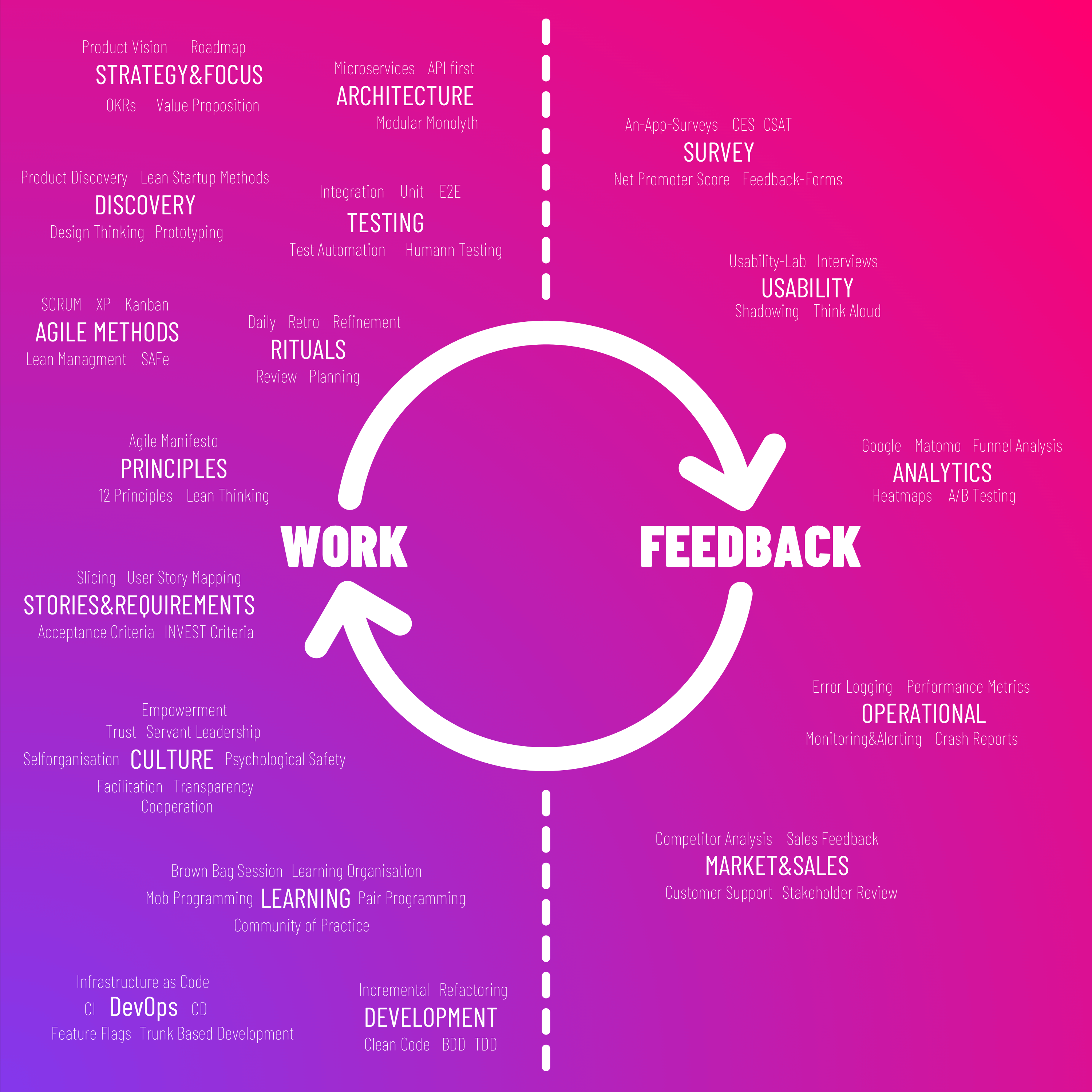
The real power of agile work lies in the load-bearing structures beneath the water. These aren't "soft topics"—they are technical and economic necessities that determine the latency of your feedback loop.
1. Operational Principles (The Economic Engine)
- Decision Latency Reduction: Real agility isn't about "empowerment" as a feeling; it's about the technical and organizational ability to get a "Yes" or "No" in minutes, not weeks.
- Economic Reason: The realization that every unvalidated feature is an expensive inventory of risk. If you aren't shipping, you're just gambling with the company's money.
- Technical Judgment: Moving away from "following the process" to "reasoning about the system." Skills beat manuals every time.
2. Engineering Discipline (The Load-Bearing Foundation)
This is where most icebergs melt. Without technical excellence, the rituals at the top become a dead weight that sinks the ship.
- Technical Confidence: The capability to push the "Deploy" button on a Tuesday afternoon without heart palpitations. This isn't a mindset; it's the result of rigorous CI/CD and automation.
- Slicing & Decoupling: Engineering the work into tiny, independent units. If your architecture is a "Big Ball of Mud," your feedback loop will always be slow, no matter how many Daily Scrums you attend.
- Technical Debt Management: Treating the codebase as a production tool, not a landfill. Continuous refactoring is the only way to keep the cost of change affordable.
3. Cultural Integrity (The Feedback Fuel)
- Time to Truth: How long can you lie to yourselves before a real user tells you the feature is useless? Culture determines if truth is welcomed as data or punished as a failure.
- Psychological Safety as a Performance Metric: Safety is not about being "nice." It's about the speed at which technical risks and mistakes surface so the loop can react.
The Stress Test for Your Iceberg
Don't look at your Jira velocity to measure agility. Ask these two diagnostic questions to see if you've addressed the layers below the surface:
- The Dependency Test: If we cancelled all meetings (the tip) today, how long would it take for the team to realize they are building the wrong thing? (This measures your Feedback Capability).
- The Fear Test: How many people have to sign off before a developer can push a small, safe change to production? (This measures your Operational Friction).
Conclusion: Stop Polishing the Tip
Frameworks organize your ignorance. Technical and operational skills eliminate it. If your "Agile Transformation" is focused only on the tip of the iceberg, you are burning money on narrative work—work that only describes the system instead of moving it.
Real agile work happens below the waterline. It's the hard, often invisible labor of building technical confidence and reducing decision latency. It's about mastering the craft so the Work-Feedback Loop can finally spin at the speed of reality.
The label is burnt. The work begins.
Welcome to the workshop.
Mastodon Diskussionen
You may also like:

Forget "Agile" Theory: The Only Cycle That Really Matters
Have you ever wondered why we are actually...

The "Agile" label is burnt. Agile work as a craft is just getting started.
If the label "Agile" carries so much baggage...

Reducing Technical Debt in the Agile Process
This article is part of the Developer Survival...

Definition of Done Practical Guide: When is code actually 'Done'?
This article is part of the Developer Survival...