Feedback Response Time
Why delivery metrics are not enough
If agile work is the capability to connect Work and Feedback fast and safely, then the obvious next question is: how do we know whether that connection actually works?
Most organizations already measure something. They measure cycle time, lead time, deployment frequency, utilization, velocity, throughput. All of these metrics describe how fast work moves forward. They are useful. But they all stop at the same point: when work is delivered.
What they do not tell you is how long it takes until feedback from reality actually changes the next piece of work — and this gap matters.
A system can deliver quickly and still learn slowly. It can release often, collect feedback, and still keep doing the same thing for weeks or months. In such systems, feedback exists, but it has no teeth. It does not alter decisions. It does not change priorities. It does not shape the next iteration of work.
What Feedback Response Time measures
This is where Feedback Response Time comes in.
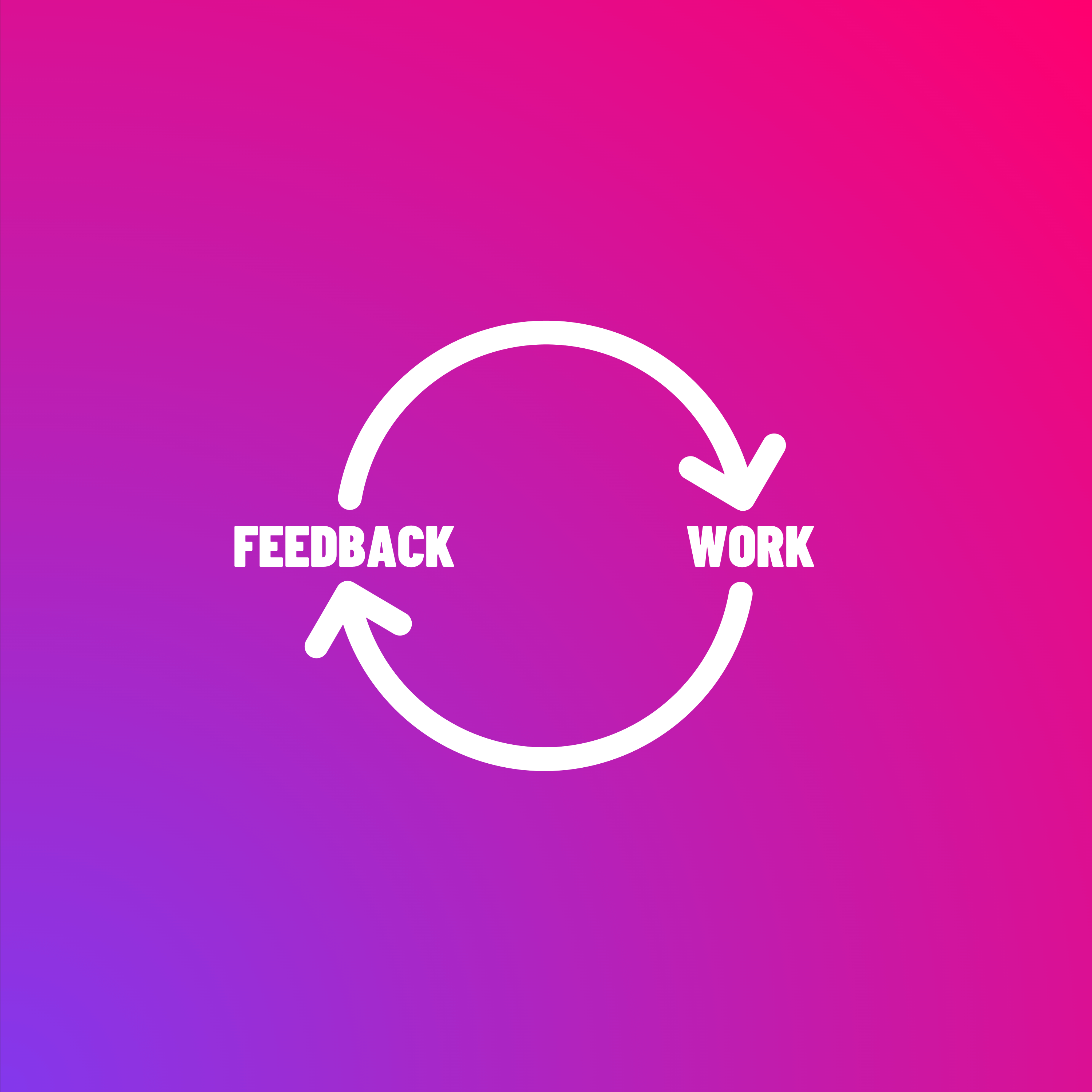
Feedback Response Time measures how long a system takes to turn real feedback into real change. Not into a ticket. Not into a discussion. Not into a plan. Into a change that is live in the system and observable in reality.
The clock starts when feedback first becomes visible. That can be user behavior in production, an operational signal, a revenue effect, a failed assumption, or an incident that exposes a weakness. The clock stops when a change is deployed that is clearly a response to that feedback. In short:
Feedback → Work → Effective change in reality.
How it is measured
To measure it, you need two explicit timestamps. The start point is the moment real feedback becomes visible in a way the team can observe and act on. The end point is the moment a change is live and effective in production that can be traced back to that feedback. Feedback Response Time is simply the time between those two points.
This only works if you are strict about definitions. “Real feedback” is not a meeting opinion, and “change” is not a ticket being created. Only closed loops count.
Why this metric is uncomfortable
What happens in between is the uncomfortable part. Decisions have to be made. Trade-offs have to be accepted. Architecture has to allow change. People need the authority to act. Risk has to be manageable. All the things organizations prefer to talk around instead of measuring show up here.
That is why Feedback Response Time is not a delivery metric. It is a learning metric. Low Feedback Response Time means that feedback has consequences. The system notices something, decides, and adjusts before the signal goes stale. High Feedback Response Time means that truth arrives early but action arrives late. In those systems, learning is slow not because feedback is missing, but because acting on it is expensive.
This distinction is crucial.
Why more feedback does not solve the problem
Many organizations respond to slow learning by adding more feedback mechanisms. More surveys. More dashboards. More reviews. More meetings. But feedback without response capacity does not create learning. It creates frustration. The loop is not closed by seeing reality. It is closed by changing work.
Feedback Response Time makes this visible.
How it connects to the Diagnosis Matrix
It connects directly to the Diagnosis Matrix. Systems in the Learning quadrant tend to have short Feedback Response Times. Systems in Actionism look busy but respond slowly. Systems in Frustration see problems clearly but cannot act. Systems in Stagnation are slow on both ends. The matrix shows where the loop breaks. Feedback Response Time shows how long it stays broken.
This metric also explains why many improvement initiatives disappoint. A new tool, a new method, or a new role may improve delivery speed while leaving Feedback Response Time untouched. From the outside, things look faster. Inside the system, learning does not accelerate. Cost shifts instead of disappearing.
Why this belongs under the Work–Feedback Loop
That is why this metric belongs under the Work–Feedback Loop.
Agile work is not about producing output quickly. It is about shortening the distance between an idea and its consequences, and then shortening the distance again. Feedback Response Time measures exactly that distance on the return path.
Everything that does not measurably reduce Feedback Response Time is overhead.
Not because it is bad in principle, but because it does not improve the system’s ability to learn. If feedback arrives and nothing changes for weeks, the loop is slow, no matter how modern the process looks.
How to use the metric
Feedback Response Time does not replace existing flow metrics. It complements them. Cycle time tells you how fast you move forward. Feedback Response Time tells you how fast you correct course. You need both. But if you only measure the first, you will systematically overestimate your agility.
This is not a maturity model. There is no target number. Shorter is better, but only as long as changes remain safe. Fast without safety produces chaos. Safety without speed produces stagnation. Feedback Response Time lives exactly in that tension.
You do not improve it by adopting anything. You improve it by diagnosing where feedback waits, where decisions stall, and where change becomes risky. Then you pick one constraint and reduce it. If the loop does not get shorter, you stop.
That is the point of the metric.
Feedback Response Time does not tell you what to do. It tells you whether what you did actually helped the system learn.